Beyond the Hype: Why AI Invisibility Is the Next Big Step in Technology
Beyond the Hype: Why AI Invisibility Is the Next Big Step in Technology
The history of technology has taught us that every major revolution has a biological clock of roughly a decade. It happened with mainframes in the 1950s, with the arrival of the home PC in the 1970s, with the explosion of the internet in the 1990s, and finally with the era of mobile phones and apps between 2007 and 2015. All these waves followed the same meme and pattern: an explosive start, a period of cultural disruption, and finally a silent transition toward normality.
The critical difference is that artificial intelligence is completing this cycle at two to three times the speed. We are no longer in the phase of collective surprise at a generative model; we are fully entering the maturity and saturation point of the AI era.
From Common Commodity to the Invisible "Operating System"
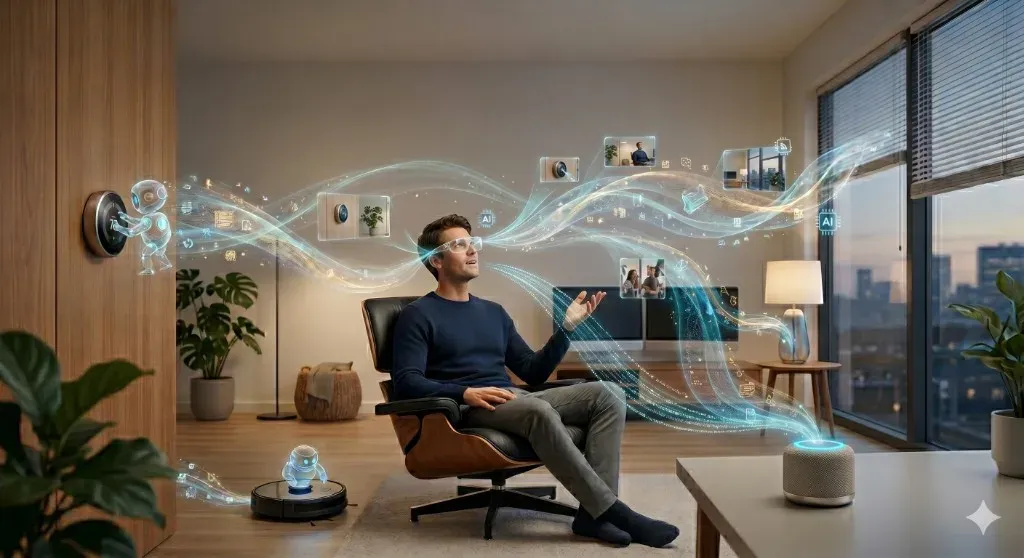
The constant flood of increasingly powerful and efficient open-source models — capable of running locally on compact devices or laptops — combined with the deployment of new active devices such as smart glasses, is accelerating an inevitable phenomenon: AI is becoming a basic utility.
We are moving from the phase of "building AI" to the phase of integrating it as a fundamental infrastructure layer. It will, de facto, become an invisible operating system running in the background.
Just as today no developer stops to think about whether an application requires electricity to work, and no user says "I will connect to the internet" because we simply operate and live within the network, the "powered by AI" label has its days numbered. The real success of a disruptive technology lies in its ability to disappear from the spotlight and become part of everyday furniture.
Value will no longer be found in the language model used, but in the human value we are able to bring to make people's lives easier.
Ambient Computing: The Challenge of Making the Screen Disappear
This paradigm shift strikes directly at the core of how we have understood software and hardware engineering over the past decades. We have spent an entire generation designing complex graphical interfaces (GUIs): dashboards full of charts, detailed forms, colorful buttons, and endless menus. All this visual architecture was created with a single purpose: to hide and resolve the technical friction between machine and human.
But what happens when the underlying technology is intelligent enough to understand the user's pure intent?
The future of engineering is not about painting new visual layers, but precisely about making the screen disappear. We are entering the era of ambient computing, where the best interface is the one you don't see.
Voice Is the Button of the Future
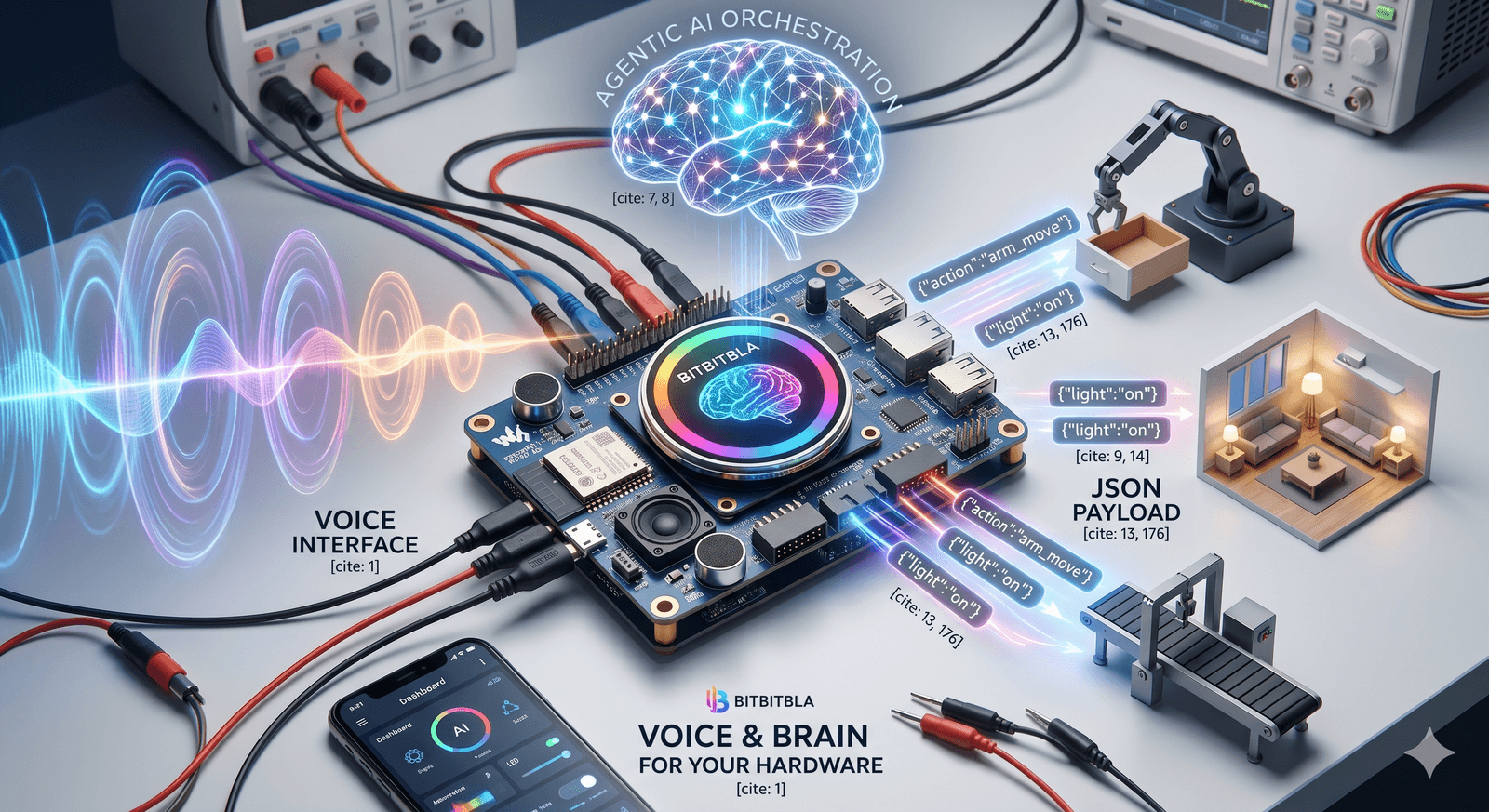
When AI acts as an invisible infrastructure layer, the most natural way to communicate with it is through speech. The future of the frontend is conversational. However, the challenge is not to add a "chatbot" that chats recreationally with the user, but to be able to orchestrate the direct bridge between the physical world (edge devices) and agentic intelligence.
Imagine replacing the complexity of controls on a button-filled thermostat or an industrial application saturated with menus with a direct interaction. The user expresses a need in natural language and the system translates it into action as a deterministic JSON object or payload, sent directly through physical ports such as UART, I2C, or Webhooks to execute an immediate, low-latency physical action.
We are moving from programming visual code to orchestrating human intentions in real time.
The Start of the Real Technological Game
Grounding artificial intelligence in everyday environments, optimizing latency, eliminating unnecessary intermediate layers, and delivering real, tangible utility is where the true battle of innovation will be fought.
AI is becoming invisible and silent. And it is precisely now, when it steps out of the way, that the real technological game begins.